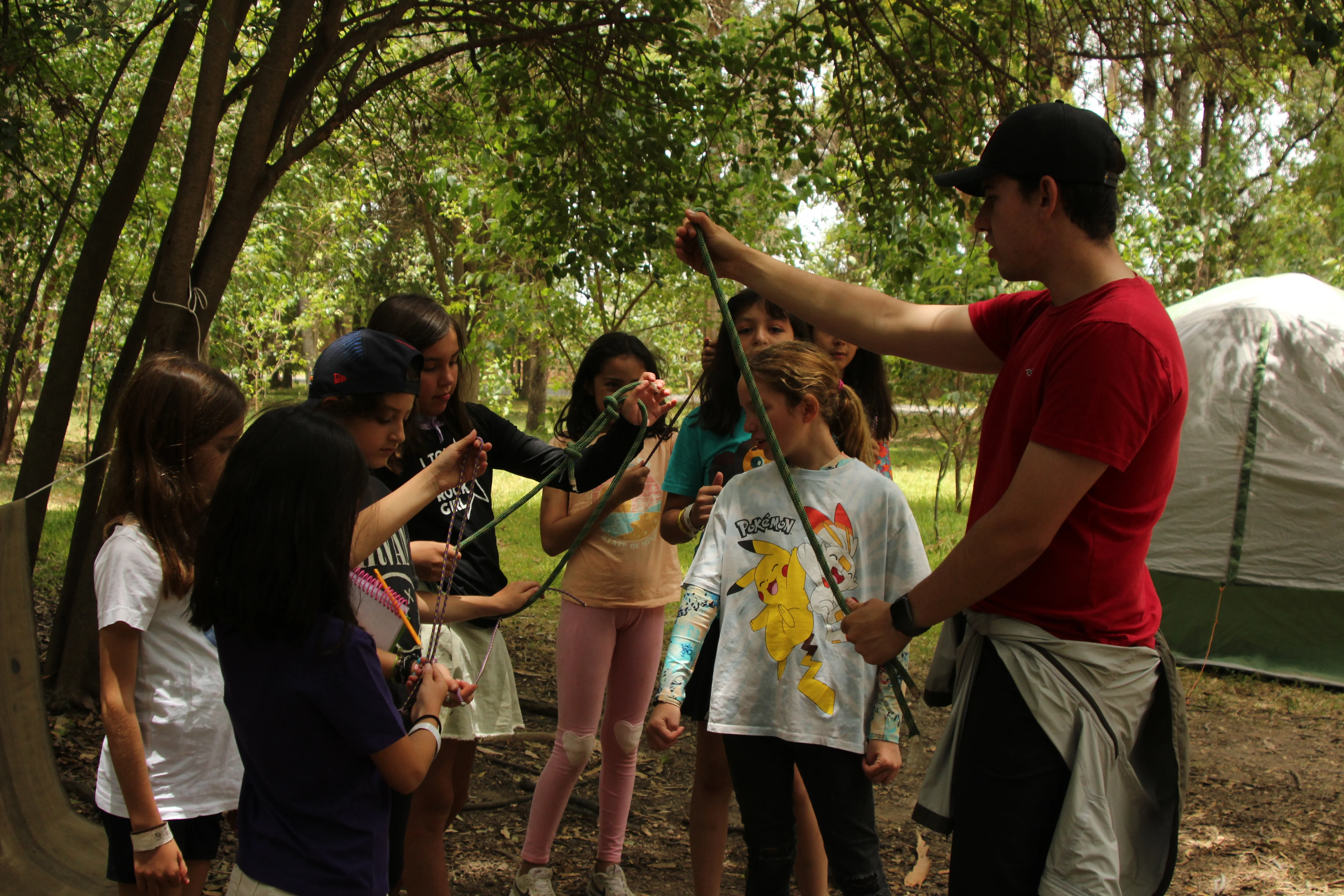
When parents think about sending their children to a summer camp, their minds usually fill with traditional, nostalgic imagery: children running through open green fields, singing songs around a campfire, sharing late-night laughs in a cabin, and making lifelong friends. However, beneath the joyful surface of daily adventure lies a much more profound, neurological phenomenon. Every physical challenge, every group dynamic, and every artistic workshop represents an invaluable opportunity for the cognitive and personal development of boys and girls.
Camp Santa Úrsula functions as a catalyst for passion. It provides an environment completely free from the rigid pressures of traditional school routines, specifically designed to allow participants to safely explore new interests, uncover talents they never knew they possessed, and build healthy hobbies that can eventually transform into lifelong callings.
The Science of Hobbies: Neuroplasticity and Cognitive Growth
A hobby is frequently misunderstood as a simple pastime—a casual way to fill free hours during school vacations. Modern neuroscience, however, tells a completely different story. Engaging in a structured, enjoyable hobby is a complex neurological workout that keeps the brain active, flexible, and fundamentally healthy.
When a child participates in an activity they genuinely enjoy, their brain simultaneously activates multiple regions responsible for focused attention, working memory, spatial orientation, and creative problem-solving. Furthermore, practicing and repeating an activity that ignites a child's inner motivation triggers the dopamine-driven reward system. This deliberate practice strengthens neural connections through a process known as neuroplasticity—the brain's intrinsic ability to adapt, reorganize, and build new pathways in response to external stimuli.
The Critical Window of Childhood and Adolescence
During childhood and adolescence, the windows of brain plasticity are wide open. The brain is essentially a biological sponge, carving out pathways based on the environmental stimuli it receives.
Providing a diverse array of positive stimuli during these formative years is a crucial parental and educational responsibility. If a child's brain is exposed primarily to the passive consumption of screens, its neural networks adapt to low cognitive demands. Conversely, offering varied, hands-on experiences allows children to discover what truly sparks their internal curiosity. Time and again, we witness how a spark of curiosity ignited at camp transitions into a technical, athletic, or artistic skill that accompanies a person well into their adult life.
The Camp Ecosystem: A Living Catalog of Passions
In daily life, a child's time is highly structured. The school day follows strict academic standards, and home life revolves around complex logistics. This leaves very little room for unprogrammed, organic exploration. In both our school camp programs and our traditional summer camps, the itinerary is deliberately built to shatter that rigidity, converting every single day into an open laboratory for self-discovery.
Artistic Workshops and Cultural Expression
A child who might perceive themselves as "not athletic" in their day-to-day routine often finds a deep sense of accomplishment in a painting or sculpting class, unlocking an exceptional visual sensitivity. Similarly, theater and improv sessions allow for the rapid development of public speaking and body language control, helping introverted children find their voice and shed the paralyzing fear of social judgment. Explore our full range of creative disciplines in our dedicated workshops section.
Moments of Stillness and Positive Habits
The discovery of a hobby also happens during moments of quiet reflection. During our designated resting hours—traditionally known at camp as the Absolut periods—campers are encouraged to wind down in a comfortable environment. Without the omnipresent notifications of smartphones or tablets, children naturally gravitate toward books. In this tech-free oasis, reading turns into an immersive adventure, cementing a habit that directly improves reading comprehension, vocabulary, and academic focus back home.
Rhythm, Movement, and Extreme Adventure
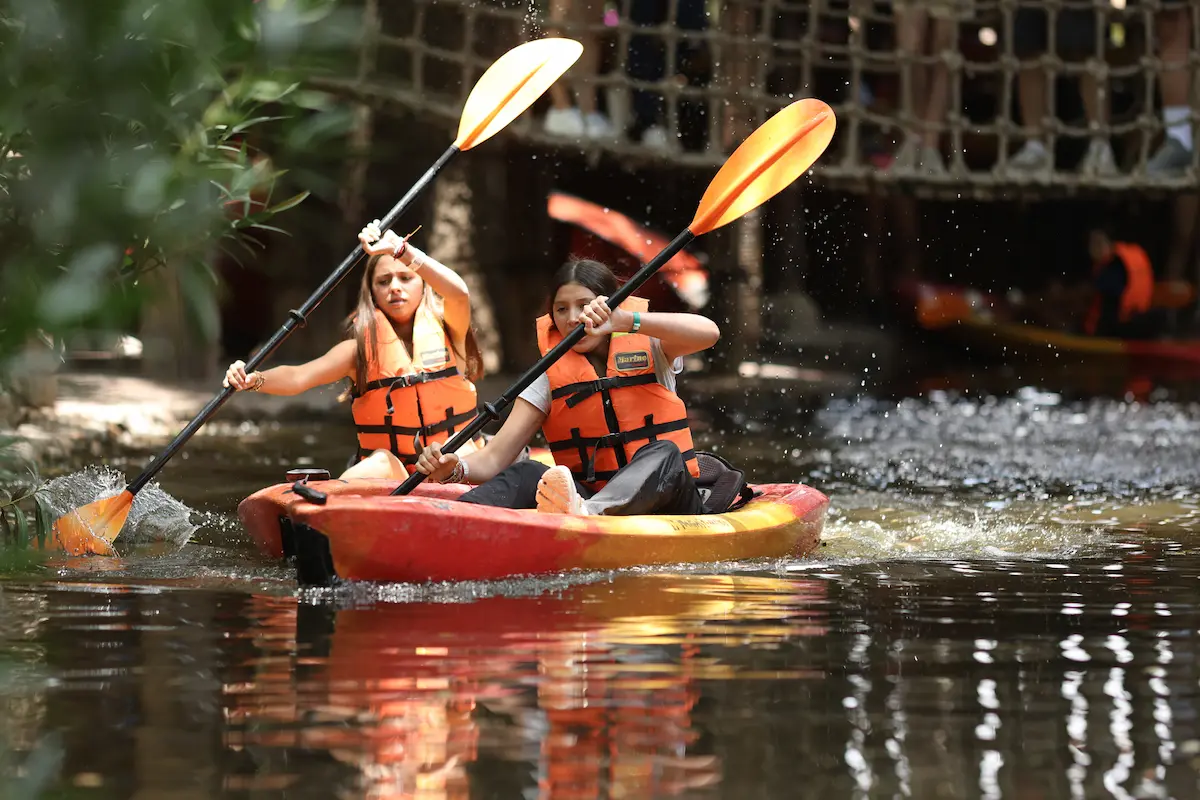
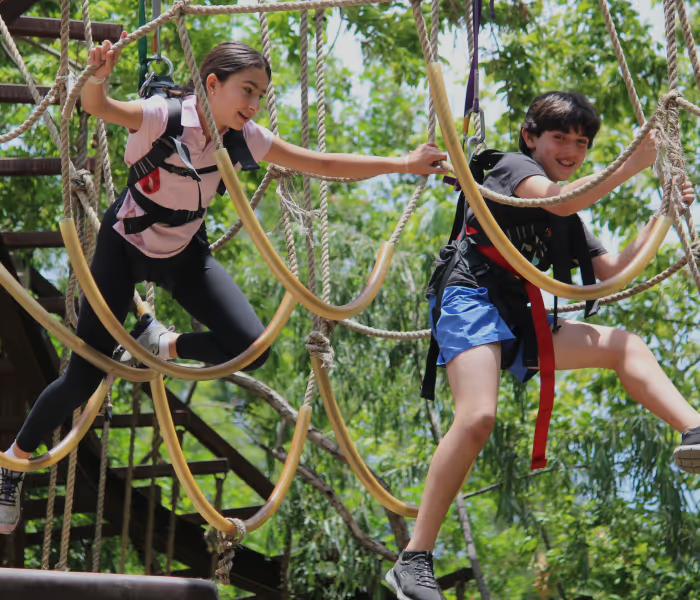
Physical hobbies take center stage during our high-energy "nights of blocks" (evening block activities). Dancing and choreography sessions are not just about entertainment; they are phenomenal exercises in motor coordination, proprioception, and spatial awareness. When you combine this creative movement with traditional sports and our hallmark adventure activities—such as rock climbing, kayaking, or go-karting—the camp becomes a holistic training ground where mind and body learn to synchronize beautifully. Parents can review the complete checklist of outdoor challenges on our activities page.
Collateral Benefits: Beyond the Moment of Fun
The advantages of identifying a healthy hobby in an outdoor camp setting extend far beyond the weeks spent on our campgrounds. These newly acquired skills and mental frameworks transfer directly to the child's academic and family life upon their return.
Participating in directed recreational dynamics has immense psychological value that is often invisible to the untrained eye. An activity that looks like a simple game on the green field is actually a carefully engineered pedagogical tool. Campers learn to win with humility, lose with resilience, navigate peer-to-peer conflict, and appreciate the distinct strengths of their teammates.
Camp Santa Úrsula’s Methodology: Intentional Experiences
Our organizational core believes that true personal transformation does not happen by accident; it requires consistent exposure to meaningful, highly structured experiences. For this reason, our summer and graduation itineraries are never a random collection of games designed to burn time; they are directly aligned with a comprehensive experiential learning matrix.
We leverage the power of experiential education—a methodology where knowledge is acquired through direct action, deep reflection, and real-time team application. To make this discovery process seamless, our camp provides two non-negotiable foundations:
Sowing the Seeds for a Brighter Future
The ultimate goal of Camp Santa Úrsula goes beyond providing memorable entertainment for the summer of 2026. We aim to leave a permanent mark on the timeline of our participants. We look to sow intellectual curiosity, awaken artistic sensibilities, and nurture healthy hobbies that can eventually evolve into the professional talents and career paths that shape their adult futures.
For our older teenagers (ages 15 to 17) who want to transition these discovered passions into actionable leadership and community identity, our Santa Úrsula Evolution program offers the perfect next step, allowing them to manage large-scale camp projects and master strategic decision-making.
We know with absolute certainty that behind every single camp activity lies the genuine possibility of discovering a hidden passion—and behind every well-guided passion lies an extraordinary individual capable of changing the world. We invite you to learn more about our 40-year legacy and the team making this magic possible in our about us section, and ensure your child’s nutritional needs are met through our professional nutrition plans.
Are you ready to unlock your child's hidden potential this summer 2026? Give them the priceless gift of stepping away from the daily routine to explore a world of adventure, creativity, and self-discovery in a pristine natural environment. Registration for our upcoming camp blocks is now open; help them find the passion that will define their future.


.webp)


.webp)