How our campers arrive – and how they leave
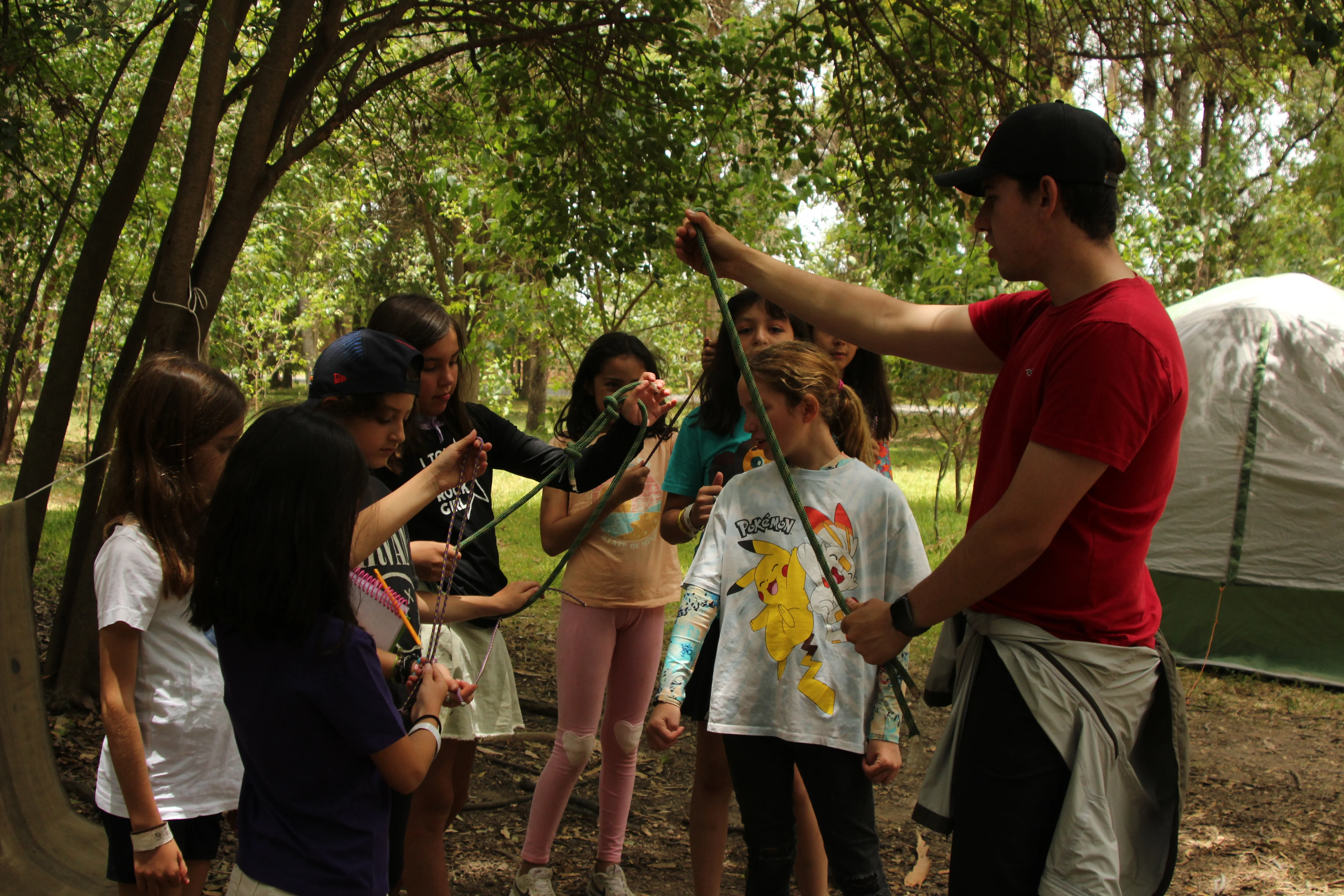
Every summer, when we open the gates of our summer camp for children, we see the same scene: girls and boys arriving with backpacks full of clothes… and hearts full of nerves, curiosity, and questions.
Some arrive shy, clinging to mom or dad’s hand.
Others don’t stop talking from the parking lot.
Some have already been to other camps and come in feeling confident.
And there are also those for whom it’s the first time they sleep away from home.
At Camp Santa Úrsula, that first day matters. Not only because it marks the start of the summer program, but because that’s when the deeper work begins: building a safe, human environment where every camper can be authentic.
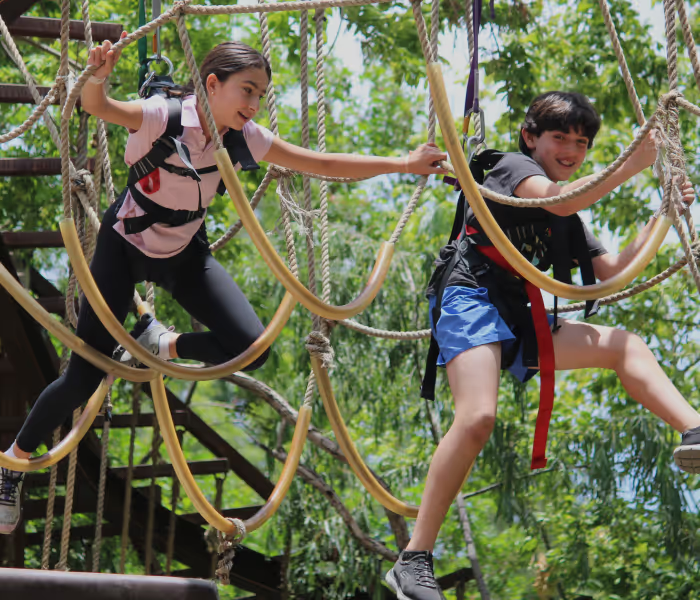
The goal is not for “everyone to be the same,” but exactly the opposite: for each child to feel seen, respected, and supported just as they are. From there, soft skills start to show up in everyday moments: in the child who raises a hand to help a friend, in the one who dares to go down the zipline, in the one who learns to say “I don’t want to, I’m scared” and is heard.
By the end of the program, families usually notice very concrete changes: children who dare to participate more, who solve small things on their own, who talk about their camp friends and the challenges they managed to overcome. It’s not magic; it’s a process that is built day by day.
What soft skills are and why they matter in childhood
Various studies indicate that regular physical activity and group play support emotional well-being, social connection, and self-esteem in childhood. At the same time, social-emotional learning shows that when these skills are worked on in safe spaces, children develop greater confidence, better relationships, and tools to face everyday challenges.
A well-designed summer camp for children brings these two worlds together: movement and emotion, play and reflection, fun and learning. Soft skills are emotional and social abilities that help girls and boys relate better to others and to themselves. Among them are:
- communication
- empathy
- resilience
- teamwork
- leadership
- problem-solving
- emotional self-regulation
Soft skills that come to life at a summer camp for children
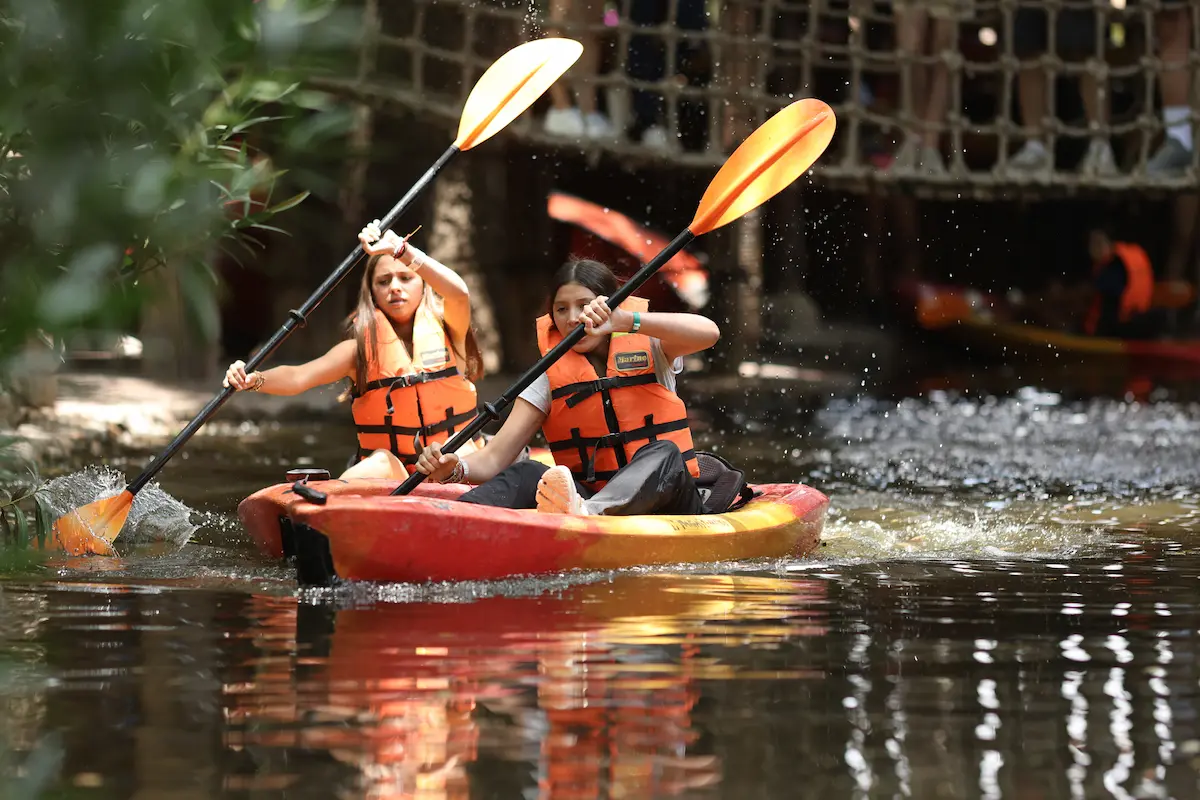
At Camp Santa Úrsula, soft skills are not explained on a whiteboard; they are lived. Throughout the summer program, girls and boys face real, yet contained, challenges where they can practice without fear of “making a mistake.”
Communication and empathy
During a team activity, it doesn’t matter who is “the most popular” at school; what matters is who knows how to listen, encourage, and support others when something goes wrong. That’s where empathy is born. Sharing cabins, teams, and group activities means campers have to talk to each other, reach agreements, and listen to different points of view.
They learn to say what they need: “I’m scared,” “I want to try,” “Can you help me?”
They discover that not everyone thinks the same way – and that this is okay.
They get used to asking for help and offering it.
Teamwork and leadership
In outdoor activities such as station challenges, trust exercises, or strategy games, teamwork is not a speech, it is a necessity:
- If someone gets too far ahead, the team loses.
- If no one makes decisions, the group gets stuck.
- If only one person speaks up, others stop participating.
Children try out different roles: sometimes they lead, sometimes they follow, sometimes they mediate. Juan, who arrives used to “being in charge,” discovers the value of listening. Ana, who usually stays in the background, finds a moment to suggest the strategy that ends up moving the group forward.
Resilience and managing frustration
With the support of the staff, campers learn to hold their frustration without getting stuck in it: to breathe, try again, ask for support, and learn to say, “I didn’t manage it this time, but I made progress.”
That resilience later carries over to school, to sports, to family life. At a summer camp for children, not everything goes perfectly – and that is intentional:
- There are games that are lost.
- Activities that feel scary at first.
- Challenges that require several attempts.
Autonomy, identity, and a sense of personal safety
Being at a children’s camp in San Luis Potosí, away from their daily routine, allows kids to make small decisions for themselves: what they are going to wear, how to organize their things, how to take care of themselves and others.
When a child knows they are loved, listened to, and accompanied, they dare to shine with their own feathers, like the peacock, the symbol of Camp Santa Úrsula. That image runs through the entire program: we don’t want children to look like each other; we want each of them to discover their own way of being and inhabiting the world.
What changes at home after camp
Families usually notice very concrete changes at the end of the summer camp for children. The impact is not always seen in big speeches, but in everyday gestures:
- children who dare to try new things
- girls who participate more in class or at home
- siblings who solve conflicts with fewer shouts and more dialogue
- greater responsibility with their things and routines
A summer camp for children does more than just fill the vacation days with activities: it opens up a caring space where they can practice, step by step, many of the skills they will need throughout their lives.
If you are looking for something more than just “keeping them entertained,” at Camp Santa Úrsula we want to be that place where your children have fun, get wonderfully tired from so much play and, almost without realizing it, learn to know themselves, live better with others, and trust themselves more.


.jpg)

.webp)


.webp)