When teenagers disconnect: what really happens when the phone stops being the center
Many parents share the same thought: “My child is always on their phone, but if I take it away… I don’t really know what would happen.”
It’s not the teens’ fault. Social life happens on screens, school requires it, and entertainment is designed to keep them hooked. The problem isn’t the device itself—it’s the lack of spaces where they can redirect their mental, physical, and emotional energy in a more organic way.
That’s why it’s worth observing what happens when a teenager enters a tech-free environment, with real challenges, authentic connection, and stimuli that don’t depend on a notification.
The brain changes when the environment changes
A teenager without a phone doesn’t become “empty”; instead, channels that were previously occupied begin to open. In a natural setting, with constant movement and structured challenges, attention starts to shift toward what is tangible: the body, emotions, and human connection.
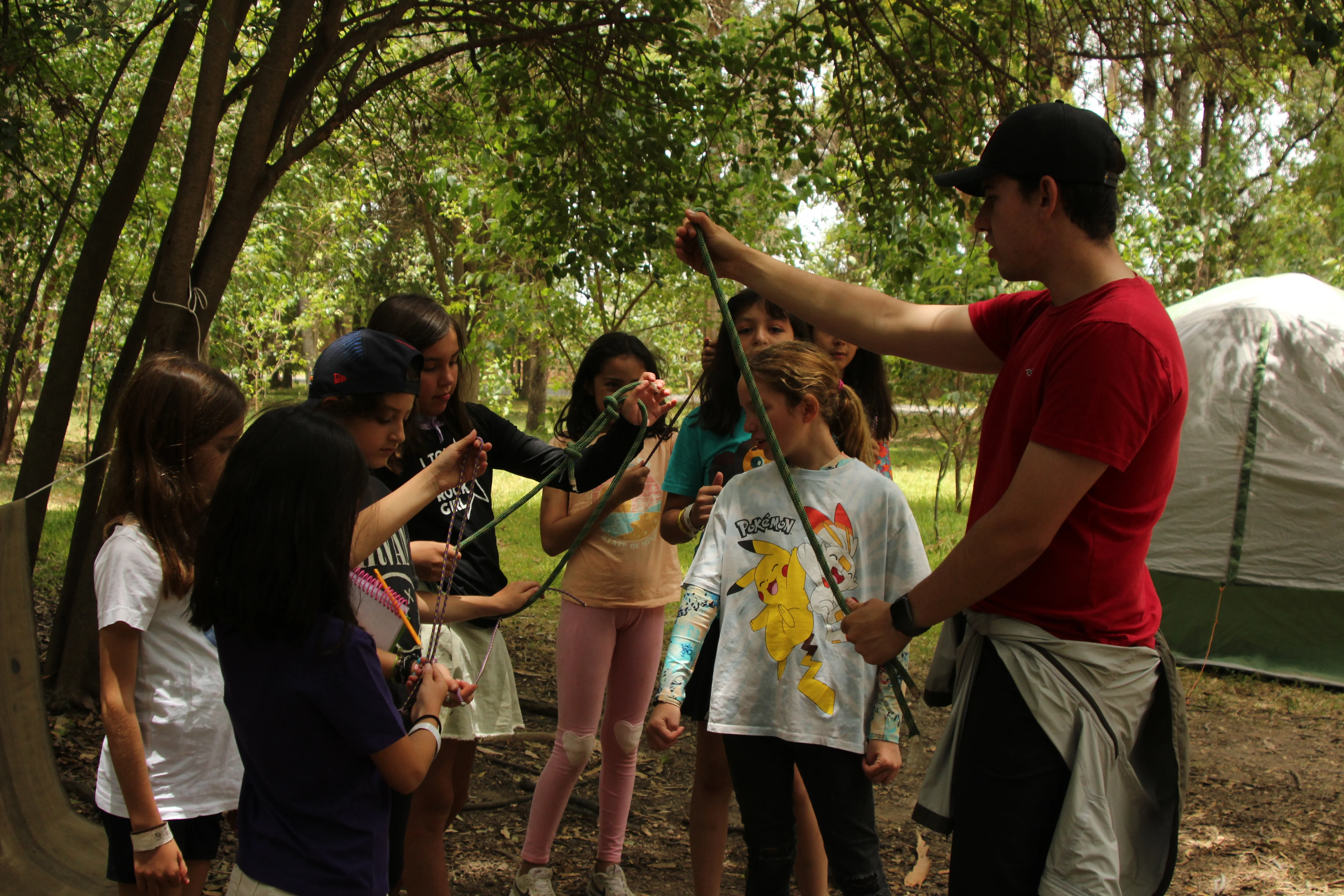
In programs like those at Camp Santa Úrsula, this transition is intentional. There are hikes, physical challenges, focus activities, creative dynamics, and collaborative tasks that activate different areas of the mind. What the camp defines as “awakening”—an internal process that combines mental clarity, emotional strength, and self-recognition—emerges naturally when the environment is thoughtfully designed.
“There is so much information circulating that in the end we don’t know where to place our attention.”
Lic. Ursula Martínez Lavin
General Director, Camp Santa Úrsula
Screen-free connection is not nostalgia: it’s a developmental tool
Teenagers are used to filtering their identity online. When that filter is removed, something far more valuable appears: authenticity. Accepting a physical challenge, collaborating with strangers, negotiating, listening, failing, and trying again—these are skills no app can replicate.
In EVOLUTION, each challenge is designed to activate behaviors such as leadership, resilience, creativity, and teamwork. They are not presented as “training exercises” but lived as adventures. As a result, teens participate without feeling like they are being evaluated, which opens the door to deeper emotional learning.
“Without screens, we learn how to coexist, reach agreements, and build our identity with others.”
Ing. Marco Garfias
Operations Director, Camp Santa Úrsula
Challenges that drive growth: moving the body to move the mind
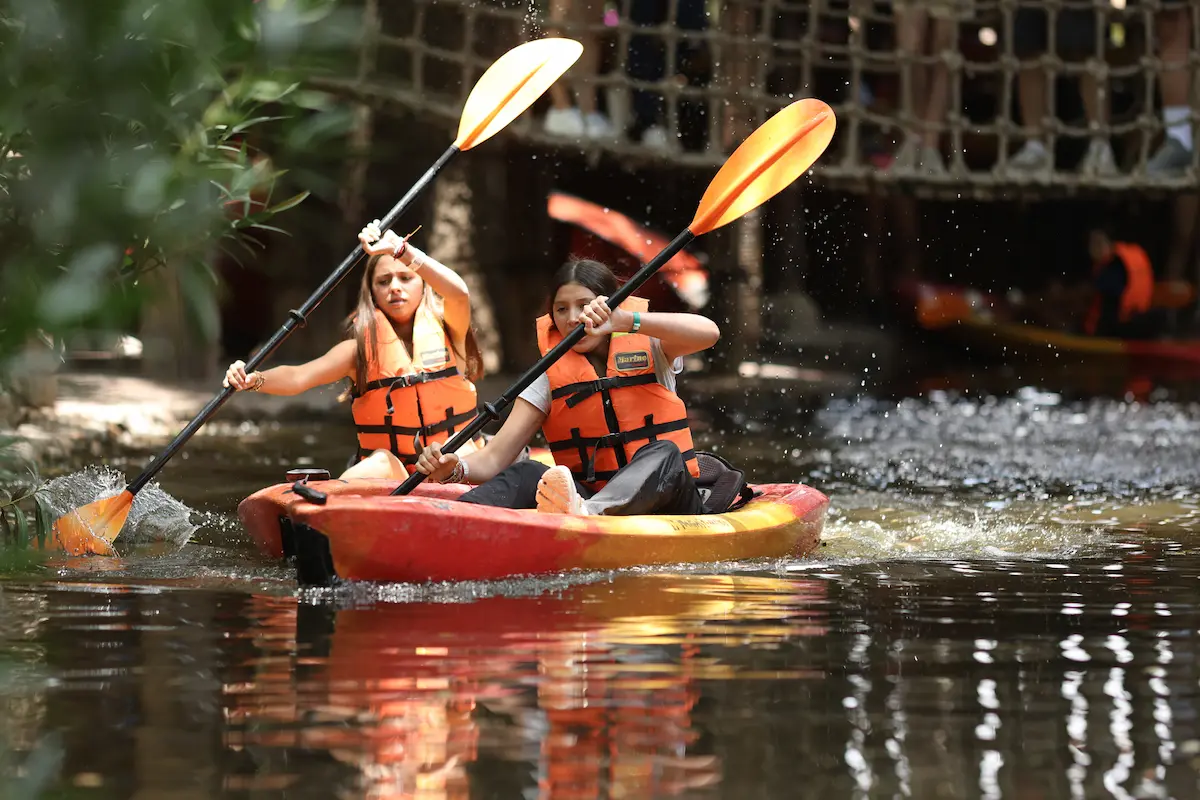
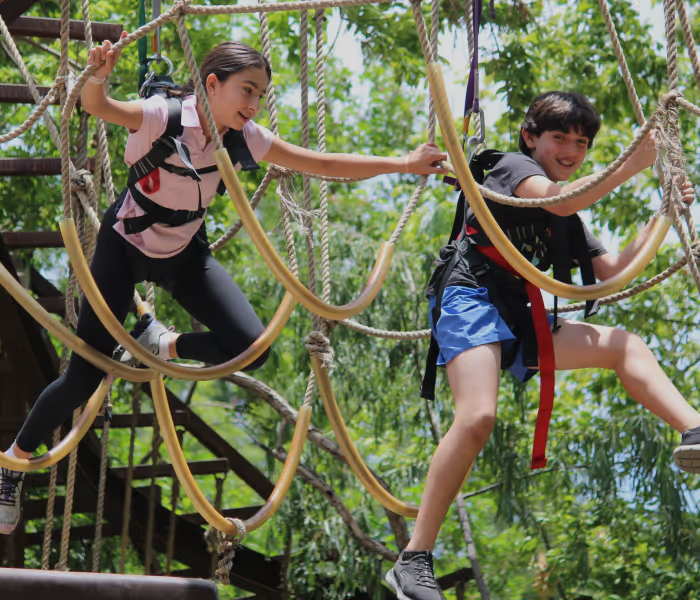
Moderate physical challenges—climbing a slope, crossing a bridge, running a circuit—create an immediate sense of accomplishment. This activates confidence, reduces anxiety, and releases accumulated energy. Without a phone, there is no way to avoid effort or distract oneself from the moment. Teens enter a state of presence that is rarely found in their daily lives.
This narrative allows each adolescent to connect with a personal process, rather than an external competition.
“Moving the body also strengthens self-esteem and emotional well-being.”
Lic. Pedro Pernia
Recreation Director, Camp Santa Úrsula
Connecting with others without the need to “look good”
When there is no pressure for the perfect photo or daily story, interaction changes. Longer conversations emerge, jokes feel more natural, and bonds form without the screen as a filter. Teenagers rediscover social interaction without external expectations—just themselves, the environment, and the people sharing the experience. They find a sense of “we” without the need to compete.
“Looking at each other matters more than a selfie.”
Lic. Pedro Pernia
Recreation Director, Camp Santa Úrsula
Narrative matters: teenagers also need symbols
A strong educational environment doesn’t just organize activities—it creates meaning. Fire, the feather, the idea of rebirth, and the concept of “awakening” used at Camp Santa Úrsula are not decorative elements. They function as metaphors that help teenagers understand their experience on a deeper level.
When a teen completes a challenge, receives a feather, or advances through a stage, they internalize that this progress speaks about who they are—not about the group or an external performance. Psychologically, this has a powerful impact: it turns each achievement into a piece of identity.
“Traditions unite us and give us identity.”
Ing. Marco Garfias
Operations Director, Camp Santa Úrsula
And what happens afterward?
Many parents describe the same pattern once their child returns home: they talk more, laugh more, move more, show renewed interest in activities outside of screens, and display a stronger sense of confidence. It’s not magic—it’s what happens when nature, movement, connection, narrative, and purpose come together.
And yes, even though these results are intangible, there is something very practical as well: teenagers discover that they can go a full week without a phone—and the world doesn’t fall apart.
What they take with them—and what parents take home
Teenagers return with a story, not a feed. With experiences they can explain, not photos they have to justify. With an identity in progress, not an image to maintain.
Parents, in turn, gain something equally valuable: the peace of mind that comes from knowing their child spent a week growing from the inside out, in a safe, guided environment designed specifically for them.
Temporary disconnection is not the goal—it’s the bridge. What truly matters happens when teenagers discover they can think better, connect better, and feel better without depending on a screen. These discoveries aren’t forced; they are intentionally sparked through structure and an environment that supports their process.
EVOLUTION was created for exactly that purpose: to offer each participant an experience that feels authentic, challenging, and tailored to them. A week where the focus isn’t on “changing,” but on awakening what was already there.
If you’d like to learn more about how the program works, its philosophy, and what your children can experience, you can explore the official EVOLUTION website.


.jpg)

.webp)


.webp)